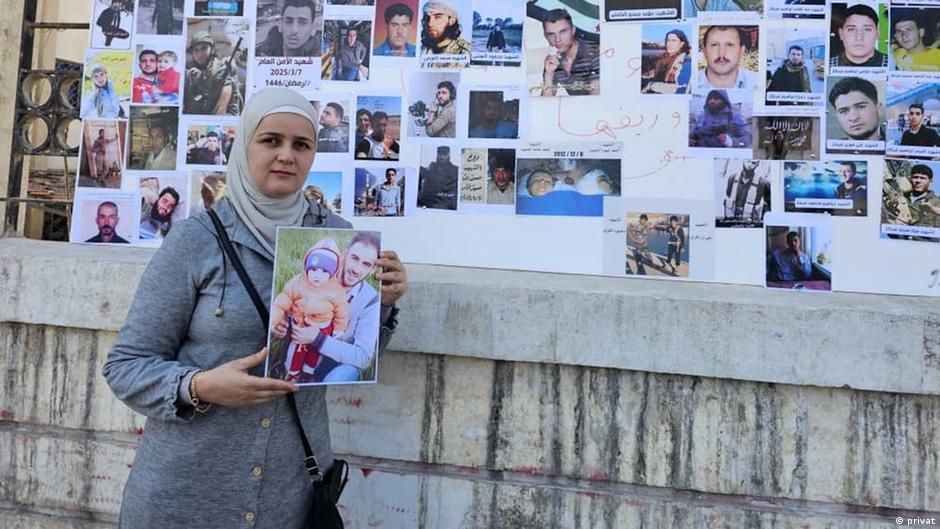
Huda Khayti, a Syrian women's rights activist, survived a 2013 chemical weapons attack on eastern Ghouta by forces under Bashar al-Assad. Her brother was killed in the bombing, her women's center destroyed, and in 2018 she fled her hometown of Douma to Idlib in northern Syria. Since the Assad regime's overthrow in late 2024, she has traveled regularly between the two towns and begun opening a new women's center.
In mid-August, a Damascus court sentenced al-Assad and other senior regime members to death in absentia for premeditated murder, torture and depriving individuals of liberty, which the court classified as war crimes and crimes against humanity. Al-Assad is currently living in Russia, where he fled after the government fell, and many other senior officials are also there or in hiding.
Khayti said the conviction was positive but noted its limits. "Even if it's only on paper, Bashar Assad just continues to live his life in Russia — like so many other Syrian criminals who fled to Russia," she told Deutsche Welle. Lina Chawaf, a Syrian journalist and researcher at Harvard University's Center for Middle Eastern Studies, said the verdict was celebrated as a victory and part of transitional justice efforts.
Russia and Syria signed an extradition treaty in 2023, but observers say Russia is unlikely to send al-Assad back to Syria, and the treaty may prevent extradition if the death penalty applies. Syria's Deputy Justice Minister Mustafa al-Qassem said in August that the country had established a commission to cooperate with Interpol on extraditing fugitives.
Khayti called for prosecutions beyond the top leadership. "I also want to see convictions for individuals who wrote reports that led to people ending up in the Saydnaya torture prison," she said. "These individuals are just as guilty as the torturers themselves." The Syrian Network for Human Rights reported that over 234,805 civilians were killed during the civil war, at least 202,000 by the Assad regime and its allies, along with at least 181,312 cases of arbitrary arrest and enforced disappearance and 45,339 deaths from torture.
Sophie Bischoff, managing director of Adopt a Revolution, a German-Syrian human rights organization, said the convictions in absentia sent an important signal. "But for survivors like Huda Khayti, these sentences remain symbolic as long as those convicted are not actually held accountable," she said, adding that it remains unclear who would be held accountable and on what legal basis.