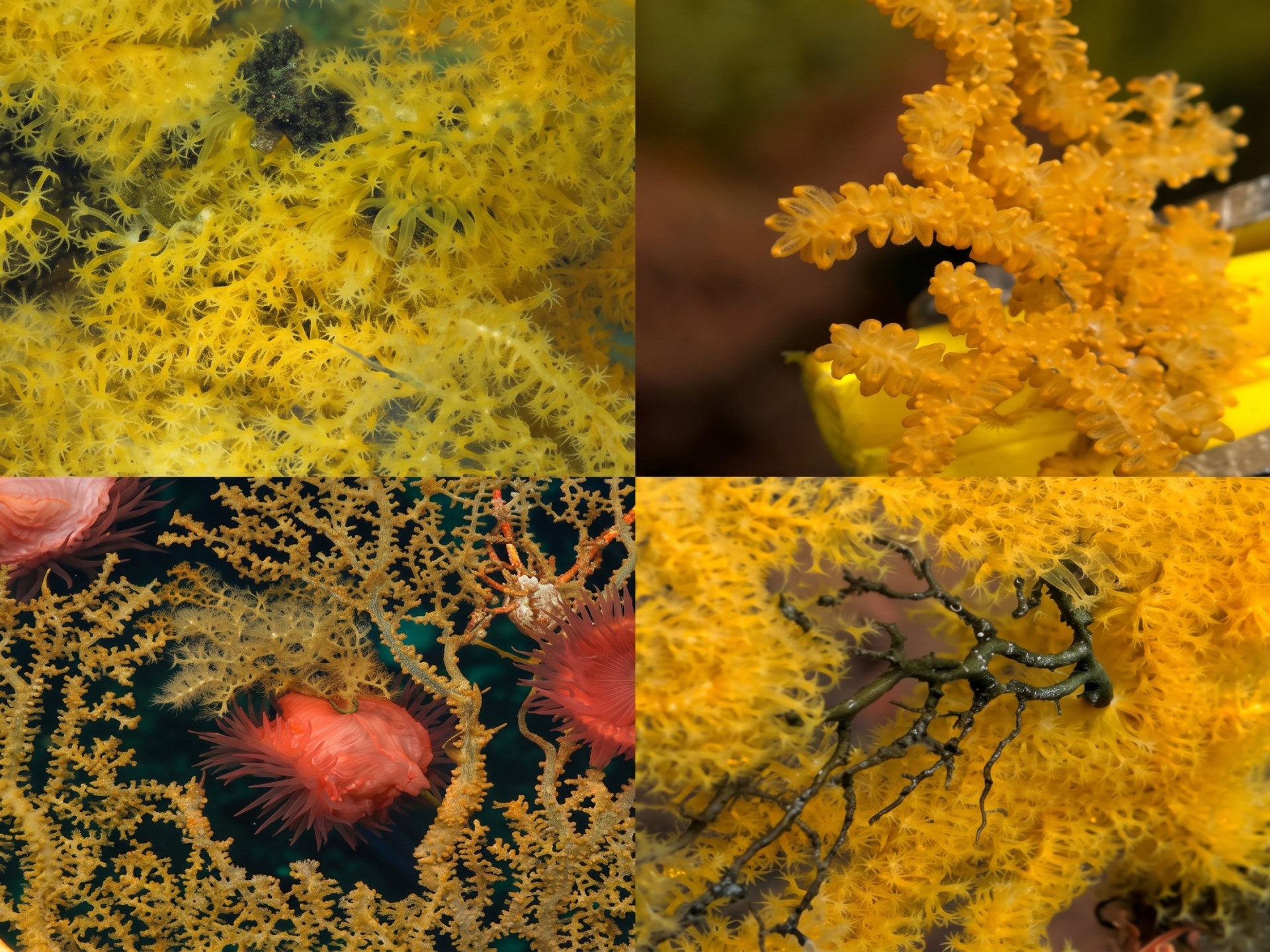
Researchers at the Schmidt Institute for the Ocean at the University of California have identified a new coral species that grows over a meter tall and resembles a golden tree, discovered in the Pacific Ocean off Costa Rica. The discovery was announced in the journal ZooKeys following exploration of underwater mountains in 2019 and 2023.
The bright yellow coral formations were surrounded by thousands of brittle stars, sea creatures with a round central body and five slender arms. The combination created what researchers described as an enchanting scene of golden trees and stars.
The coral differs so significantly in genetics and form from other known species that researchers created an entirely new genus for it: Laurineckia, derived from "Laurinceoi," meaning "golden tree" in Quenya, a language invented by J.R.R. Tolkien for "The Lord of the Rings" and "The Silmarillion." The species was named Laurineckia eleniae, with "eleniae" meaning "starry" or "of the stars" in Quenya.
Odalisca Breedy, the lead researcher from the University of Costa Rica, said she first saw the coral garden in 2019 and was struck by its beauty, which later inspired the species name. Breedy explained in statements carried by Discover Wildlife that determining where the coral fit in the family tree of corals was extremely difficult, initially appearing to belong to a known family and genus before molecular analysis revealed it was entirely distinct.
In 2023, the team collected additional specimens, and comprehensive molecular analyses by colleagues Cathy McFadden, Catalina Morillo, and Andrea Quattrini confirmed the scientific classification. Breedy noted that underwater formations like Costa Rica's submarine mountains remain inadequately explored due to logistical challenges and the high cost of deep-ocean expeditions.