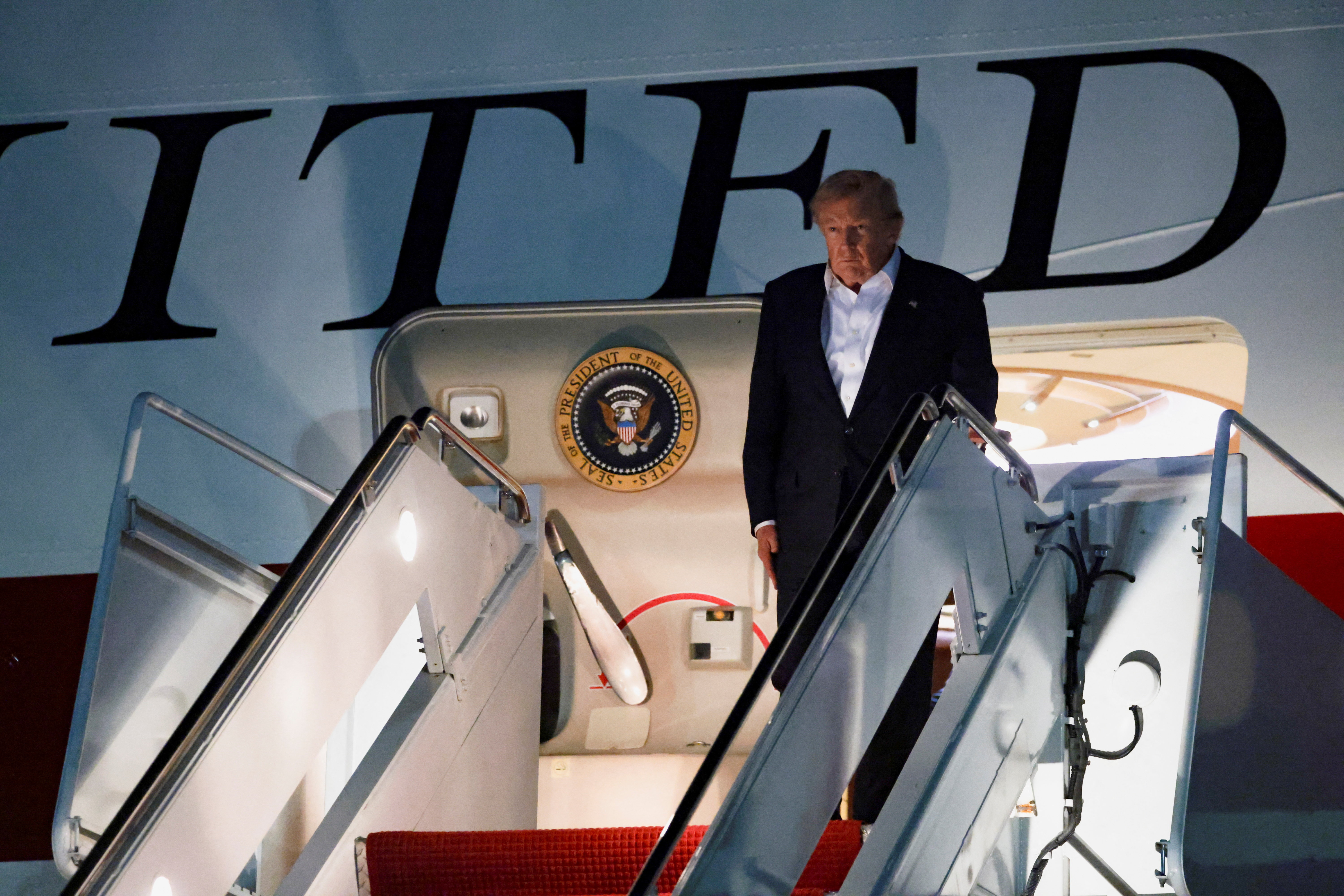
U.S. President Donald Trump plans to fly to Ireland next week aboard a Boeing 747 donated by Qatar, The Washington Post reported. It will be his first use of the aircraft since July, when he left a NATO summit in Turkey aboard a different military plane, citing a potential threat.
Trump's departure from Turkey involved switching to a smaller military aircraft in secret, using a catering truck for cover. The July episode raised questions about the security of the modified Qatari jet as a presidential aircraft.
Trump announced in July that the jet would undergo "maxed out" security upgrades, saying alterations would begin within roughly a month. A senior administration official told Military Times that the administration does not comment on specific upgrades or modifications to Air Force One, but said it "routinely evolves the capability as required to maintain" a safe and secure aircraft for the president.
Trump is scheduled to be in Ireland on September 12 and 13 to attend the Irish Open at his golf course in Doonbeg, according to the BBC. He is scheduled to meet Irish President Michael D. Higgins and Irish Prime Minister Micheál Martin during his two-day trip.
The trip follows Trump's schedule to headline the Republican midterm convention in Texas next week.