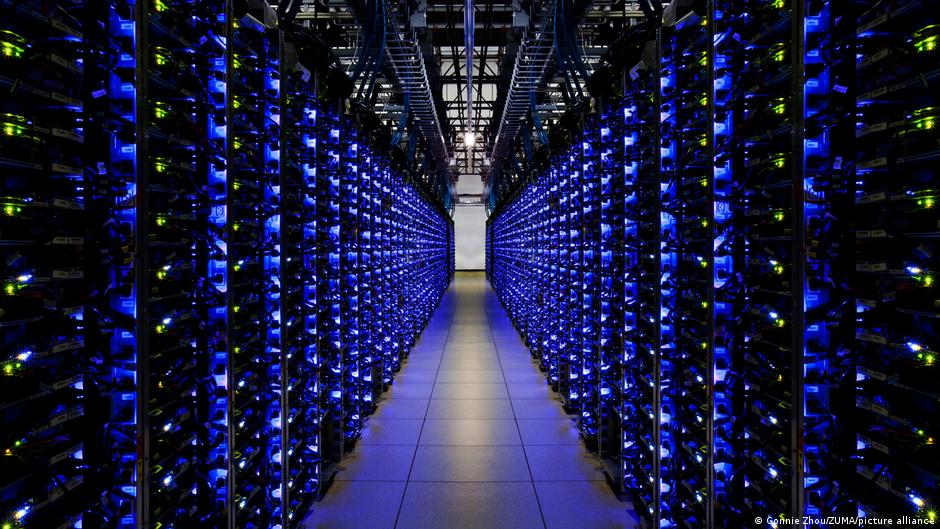
Data centers operate around the clock in locations including Virginia, São Paulo, and Hong Kong, running servers that process more than 2.5 billion daily queries to ChatGPT alone. Researchers at the United Nations University found that if data centers were a country, their electricity consumption would rank them as the world's 11th largest consumer.
Global data center electricity use is expected to double by 2030 to approximately 945 terawatt-hours, roughly equivalent to Japan's annual consumption, according to the International Energy Agency. A 2024 study found that more than half of U.S. data centers run on fossil fuels, emitting over 105 million tons of carbon dioxide annually. Utilities have delayed retirement of 15 coal-fired plants nationwide to meet surging demand, with those plants together emitting nearly 65 million tons of greenhouse gases in 2023.
In Frankfurt, Germany, data centers consume about 41 percent of the city's electricity, with the grid so saturated that no new connections are expected to be available until at least the 2030s. Dublin's data centers consume twice that share of the city's power. More than 100 gigawatts of additional gas-fired power plants have been announced across the United States, which would generate more carbon emissions than burning 111 million pounds of coal.
Many data centers use millions of gallons of water daily for cooling, with a single large facility consuming up to 5 million gallons per day—roughly the amount a town of 10,000 to 50,000 people uses. About 80 percent of withdrawn cooling water evaporates, while the remainder becomes wastewater that can overwhelm local treatment systems. Nearly 300 data centers in Northern Virginia collectively used almost 2 billion gallons of water in 2023.
Research in Phoenix, Arizona found a single large data center can emit as much waste heat as tens or hundreds of thousands of households, raising nearby land surface temperatures by up to 9 degrees Celsius and air temperatures by up to 2 degrees Celsius, with effects felt as far as half a kilometer away. A growing number of facilities now capture waste heat through thermal energy networks to supply nearby homes and businesses, reducing data center power demand by up to 30 percent.
Data center backup diesel generators release 200 to 600 times more nitrogen oxides than natural gas plants. An estimate found that Virginia's data center generators, when emitting at just 10 percent of their permitted level, could contribute to 14,000 cases of asthma symptoms, more than a dozen deaths, and up to 300 million dollars in annual public health costs.